Data Lake vs Lakehouse
If you don’t understand Data Lake vs Lakehouse, you don’t understand modern data platforms.
👉 This is the evolution:
- Data Lake → Cheap storage, flexible, but messy
- Lakehouse → Combines data lake + data warehouse
What is a Data Lake?
Data Lake is a storage system that:
- Stores raw data
- Supports:
- Structured
- Semi-structured
- Unstructured data
Examples
- S3, ADLS, GCS
Key Idea
👉 Store everything cheaply
Data Lake Flow
Raw Data → Data Lake → Processing → Output
What is a Lakehouse?
Lakehouse is a modern architecture that:
-
Combines:
- Data Lake (storage)
- Data Warehouse (performance)
-
Adds:
- ACID transactions
- Schema enforcement
- Governance
Examples
- Delta Lake
- Apache Iceberg
- Apache Hudi
Key Idea
👉 Bring warehouse capabilities to data lakes
Lakehouse Flow
Raw Data → Lakehouse → Optimized Tables → Analytics
Data Lake vs Lakehouse (7 Real Differences)
| Feature | Data Lake | Lakehouse |
|---|---|---|
| Data Quality | Low | High |
| Schema | Schema-on-read | Schema enforcement |
| Performance | Slower | Faster |
| Transactions | No ACID | ACID support |
| Governance | Limited | Strong |
| Use Case | Raw storage | Analytics + BI |
| Reliability | Low | High |
Architecture Difference (Critical 🔥)
Data Lake Architecture
- Raw data stored as files
- No strict structure
- Requires external tools for processing
👉 Problem:
- Data swamp (unorganized data)
Lakehouse Architecture
-
Uses:
- Transaction layer (Delta/Iceberg)
-
Supports:
- Versioning
- Time travel
- Schema evolution
👉 Result:
- Reliable + fast analytics
Visual Comparison
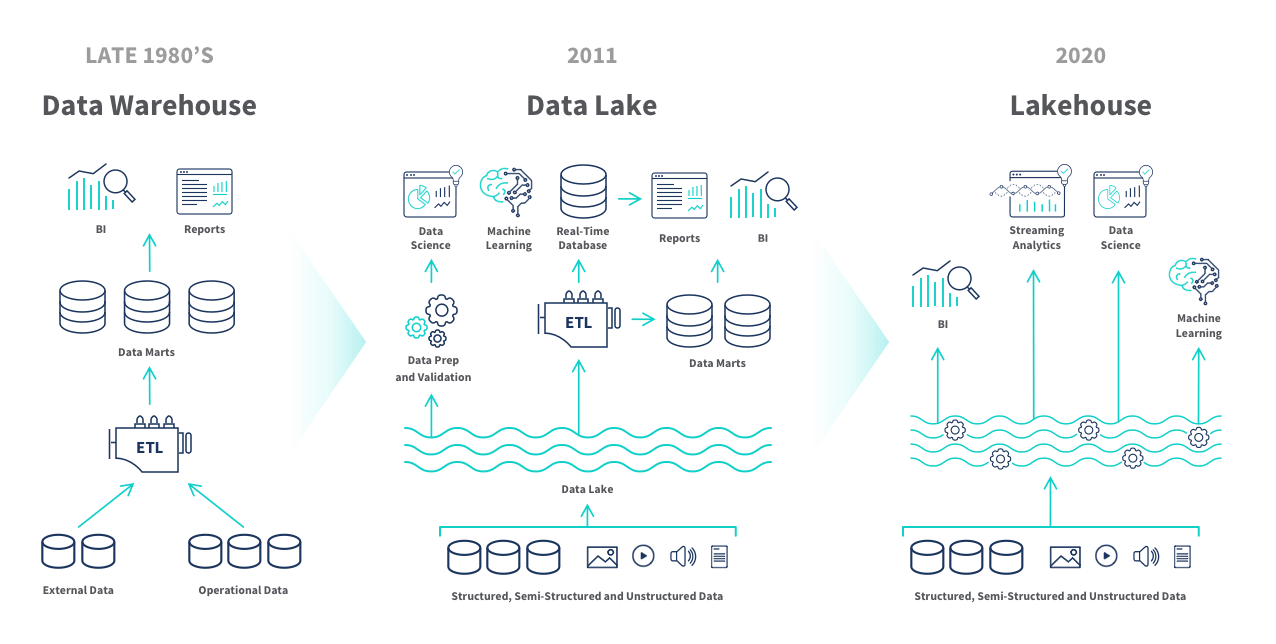
Example (Real-World)
Data Lake Example
Store raw logs → Process later → No schema enforcement
Lakehouse Example
Store data → Apply schema → Query directly with SQL
Example Query (Lakehouse)
SELECT
    region,
    SUM(sales)
FROM sales_delta
GROUP BY region;
👉 Works directly on optimized lake data
Performance Reality
Data Lake
- Cheap storage
- Poor query performance
- No guarantees
Lakehouse
- Fast queries
- Reliable data
- Supports BI workloads
👉 Reality: Lakehouse solves most problems of traditional data lakes
When to Use Data Lake vs Lakehouse
Use Data Lake when:
- Raw data storage
- Data ingestion layer
- Cost is priority
Use Lakehouse when:
- Analytics + BI
- Data governance needed
- Reliable pipelines required
Common Mistakes 🚨
❌ Treating Data Lake as Warehouse
- Leads to poor performance
❌ No Governance in Data Lake
- Creates data swamp
❌ Overengineering Lakehouse for Small Data
- Unnecessary complexity
Interview Angle 🔥
Must-Know Questions
1. What is a data lake?
👉 Raw storage for all types of data
2. What is a lakehouse?
👉 Data lake + warehouse capabilities
3. Why lakehouse is better?
👉 Performance + governance
4. Example tools?
👉 Delta Lake, Iceberg, Hudi
Compare Data Engineering Concepts
FAQ
What is a data lake?
A storage system for raw data in any format.
What is a lakehouse?
A system combining data lake and data warehouse features.
Why is lakehouse better than data lake?
It adds performance, governance, and reliability.
Can lakehouse replace data warehouse?
In many modern architectures, yes.
Comparison Cards
Data Lake
- Stores raw data
- No schema enforcement
- Low cost
- Risk of data swamp
Lakehouse
- Structured + governed
- ACID transactions
- Fast queries
- Supports BI
Final Summary
- Data Lake = Cheap storage, less control 🧱
- Lakehouse = Reliable, fast, modern analytics ⚡
👉 Modern architecture:
- Data Lake → Raw layer
- Lakehouse → Processed + analytics layer