ETL vs ELT
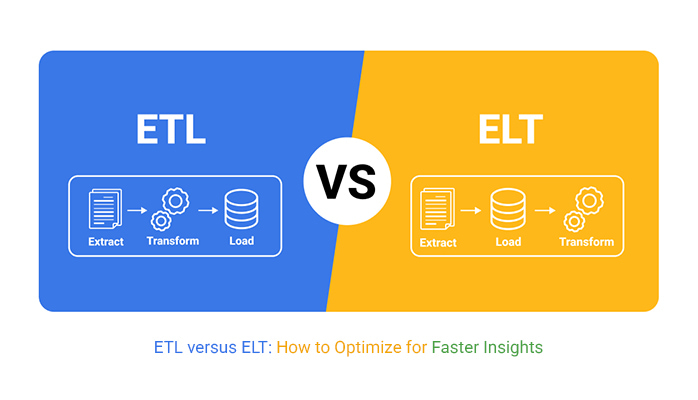
If you don’t understand ETL vs ELT, you don’t understand modern data pipelines.
👉 These are two fundamentally different ways of moving and transforming data:
- ETL → Transform before loading
- ELT → Transform after loading
What is ETL?
ETL (Extract, Transform, Load) is a traditional data pipeline approach:
- Extract data from source
- Transform it (clean, filter, join)
- Load into data warehouse
Key Idea
👉 Data is cleaned before storage
ETL Flow
Source → Transform Engine → Data Warehouse
What is ELT?
ELT (Extract, Load, Transform) is a modern approach:
- Extract data
- Load raw data into warehouse
- Transform inside the warehouse
Key Idea
👉 Raw data is stored first, then transformed
ELT Flow
Source → Data Warehouse → Transform (SQL / Spark)
ETL vs ELT (7 Real Differences)
| Feature | ETL | ELT |
|---|---|---|
| Order | Transform before load | Transform after load |
| Processing | External engine | Inside warehouse |
| Speed | Slower | Faster (modern systems) |
| Flexibility | Low | High |
| Storage | Limited | Cheap & scalable |
| Use Case | Legacy systems | Modern data platforms |
| Data Modeling | Predefined | Flexible / evolving |
Data Modeling: ETL vs ELT (Critical 🔥)
ETL Data Modeling
- Schema defined before loading
- Strong structure (Rigid)
- Changes are expensive
👉 Example:
- Cleaned tables loaded into warehouse
- Mostly Star Schema ready
ELT Data Modeling
-
Schema defined after loading
-
Raw → Staging → Curated layers
-
Supports:
- Data lakes
- Lakehouse architecture
👉 Example:
- Bronze → Silver → Gold (Databricks)
Example Code (Real-World)
ETL Example (Transformation Before Load)
-- Transform before loading
SELECT
    customer_id,
    UPPER(customer_name) AS customer_name,
    amount * 1.18 AS total_amount
FROM raw_data;
👉 Then load into warehouse
ELT Example (Transformation After Load)
-- Raw data already loaded

SELECT
    customer_id,
    UPPER(customer_name) AS customer_name,
    amount * 1.18 AS total_amount
FROM bronze_table;
👉 Transformation happens inside warehouse
Performance Reality
ETL
- Bottleneck at transformation layer
- Scaling is hard
- Slower for big data
ELT
- Uses warehouse power (MPP systems)
- Scales easily
- Faster for large datasets
👉 Reality: Modern systems (Databricks, Snowflake, BigQuery) are built for ELT
When to Use ETL vs ELT
Use ETL when:
- Strict data quality needed before storage
- Legacy systems
- Limited storage environments
Use ELT when:
- Working with big data
- Using cloud data warehouses
- Need flexibility in transformations
Common Mistakes 🚨
❌ Forcing ETL in Modern Systems
- Wastes compute power
- Slows pipelines
❌ Skipping Data Modeling in ELT
- Leads to messy data lakes
- No governance
❌ Transforming Too Late
- Causes performance issues if not planned
Interview Angle 🔥
Must-Know Questions
1. Difference between ETL and ELT?
👉 ETL = transform first
👉 ELT = load first
2. Why is ELT preferred today?
👉 Cheap storage + powerful compute
3. What is a real-world ELT example?
👉 Databricks Bronze → Silver → Gold
4. Can ETL still be used?
👉 Yes, but mostly in legacy systems
Compare Data Engineering Concepts
FAQ (Ranks Fast 🚀)
What is ETL in simple terms?
ETL extracts, transforms, and then loads data into a warehouse.
What is ELT?
ELT loads raw data first and transforms it later inside the warehouse.
Which is better ETL or ELT?
ELT is better for modern data platforms.
Why is ELT faster?
Because it uses powerful cloud warehouses for transformation.
Comparison Cards
ETL
- Transform before load
- External processing
- Slower scaling
- Rigid data model
ELT
- Load before transform
- In-warehouse processing
- Highly scalable
- Flexible data model
Final Summary
- ETL = Old school, controlled pipeline 🏗️
- ELT = Modern, scalable pipeline ⚡
👉 In today’s data engineering world, ELT is the default choice