OLAP vs OLTP
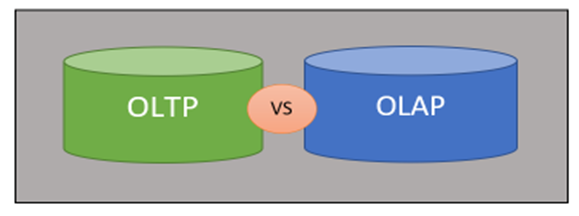
If you don’t understand OLAP vs OLTP, you don’t understand data engineering.
👉 These are two completely different systems built for different purposes:
- OLTP → Running the business
- OLAP → Analyzing the business
What is OLTP?
OLTP (Online Transaction Processing) systems are designed for:
- Handling real-time transactions
- High number of small operations
- Insert / Update / Delete
Examples
- Banking transactions
- E-commerce orders
- ATM withdrawals
Key Idea
👉 Fast, consistent, transactional
What is OLAP?
OLAP (Online Analytical Processing) systems are designed for:
- Complex queries
- Aggregations
- Historical analysis
Examples
- Sales dashboards
- Business reports
- Data warehouse queries
Key Idea
👉 Slow writes, fast reads, heavy analysis
OLAP vs OLTP (7 Real Differences)
| Feature | OLTP | OLAP |
|---|---|---|
| Purpose | Run operations | Analyze data |
| Queries | Simple | Complex |
| Data | Current | Historical |
| Operations | INSERT/UPDATE | SELECT |
| Users | Applications | Analysts |
| Schema | Normalized | Denormalized |
| Performance Focus | Write speed | Read speed |
Data Modeling: OLTP vs OLAP (Critical 🔥)
OLTP Data Modeling
- Highly normalized (3NF)
- Avoid redundancy
- Designed for data integrity
👉 Example:
- Customer table
- Orders table
- Payments table (all separate)
OLAP Data Modeling
- Denormalized (Star Schema)
- Designed for fast queries
- Uses:
- Fact tables
- Dimension tables
👉 Example:
- fact_sales
- dim_customer
- dim_product
Example Code (SQL)
OLTP Query (Transactional)
UPDATE orders
SET status = 'SHIPPED'
WHERE order_id = 101;
👉 Small, fast, single-row operation
OLAP Query (Analytical)
SELECT
    product_id,
    SUM(sales_amount) AS total_sales
FROM fact_sales
GROUP BY product_id
ORDER BY total_sales DESC;
👉 Large scan + aggregation
Performance Reality
OLTP
- Handles thousands of concurrent users
- Optimized for writes
- Index-heavy
OLAP
-
Handles large scans (millions/billions rows)
-
Optimized for reads
-
Uses:
- Columnar storage
- Caching
- Partitioning
When to Use OLTP vs OLAP
Use OLTP when:
- Building applications
- Real-time transactions required
- Data consistency is critical
Use OLAP when:
- Building dashboards
- Doing reporting / analytics
- Querying large historical data
Common Mistakes 🚨
❌ Using OLTP Database for Analytics
- Will crash performance
- Not built for large scans
❌ Over-Normalizing in OLAP
- Too many joins → slow queries
❌ Using OLAP for Transactions
- High latency
- Not reliable for real-time updates
Interview Angle 🔥
Must-Know Questions
1. Difference between OLTP and OLAP?
👉 OLTP = transactions
👉 OLAP = analytics
2. Why is OLAP denormalized?
👉 To reduce joins and improve query speed
3. Can OLTP and OLAP be combined?
👉 Yes, via modern architectures (e.g., data lakes, lakehouse)
4. Example tools?
👉 OLTP: MySQL, PostgreSQL
👉 OLAP: Databricks, Snowflake
Compare Data Engineering Concepts
FAQ
What is OLTP in simple terms?
OLTP handles real-time transactions like inserting and updating records.
What is OLAP?
OLAP is used for analyzing large datasets and running complex queries.
Which is faster OLAP or OLTP?
OLTP is faster for transactions, OLAP is faster for analysis.
Can OLTP be used for reporting?
Not recommended due to performance issues.
Comparison Cards
OLTP
- Transaction-focused
- Normalized schema
- Fast writes
- Real-time operations
OLAP
- Analysis-focused
- Denormalized schema
- Fast reads
- Historical insights
Final Summary
- OLTP = Run the business ⚙️
- OLAP = Understand the business 📊
👉 Mixing them incorrectly is one of the biggest mistakes in data engineering